


Understanding Dementia Care
Learn what quality dementia care really means — and how to evaluate whether a facility can safely support cognitive decline.
What Dementia Care Really Involves
Dementia care in a nursing home is not just “memory support.” It requires staffing, structure, training, and environmental design that reduce distress while preserving dignity.
Staffing & Training
Dementia care requires more than minimum staffing ratios.
What it includes:
Staff trained in redirection techniques, behavioral approaches, communication strategies, and non-pharmacologic interventions.
How to evaluate:
Ask how many staff are dementia-trained. Inquire about turnover rates. Observe how staff speak to residents — tone matters.


Supervision & Safety
Residents with dementia may experience wandering, confusion, agitation, or impaired judgment.
What it includes:
Secured units when appropriate, visual monitoring, structured routines, and clear environmental cues.
How to evaluate:
Ask how they prevent elopement. Observe if staff redirect calmly. Notice whether doors, hallways, and common areas feel organized and supervised.
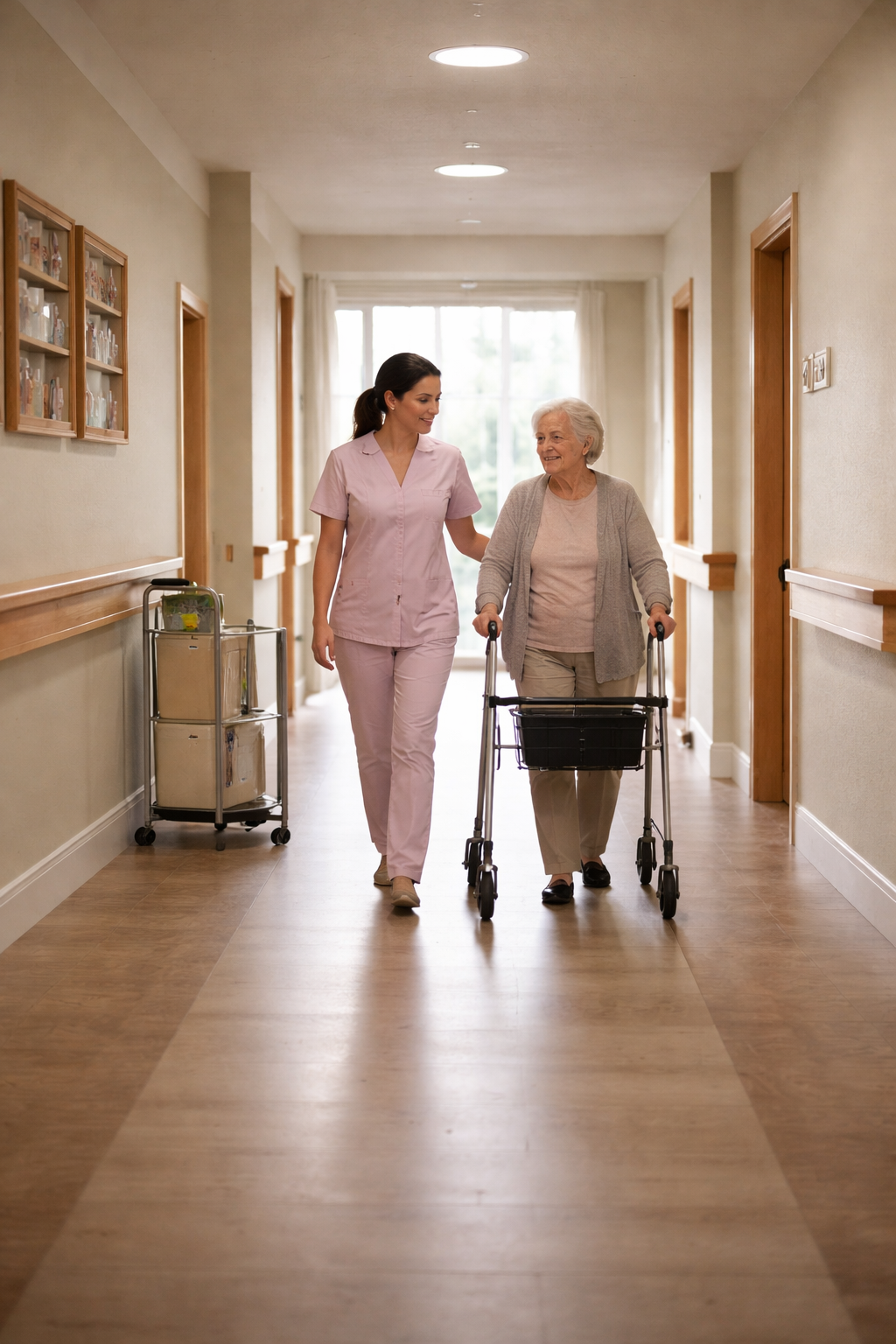

Evaluating a Dementia Unit Effectively
Dementia care requires more than minimum staffing ratios.
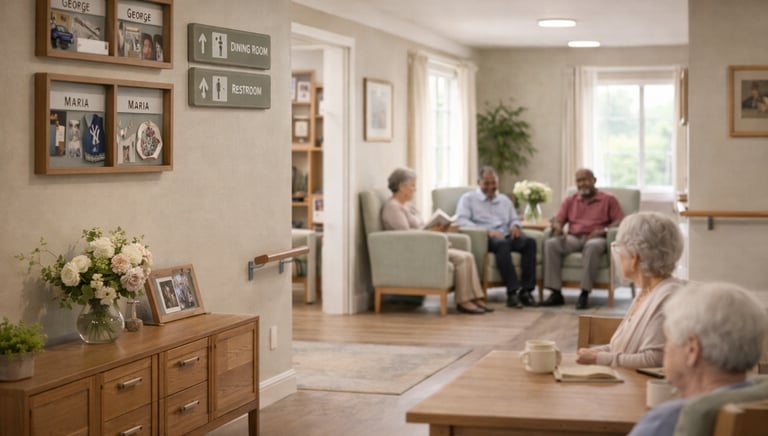
Observe the Environment
Is it calm or chaotic?
Look for adequate lighting, minimal clutter, clear signage, and safe walking paths.
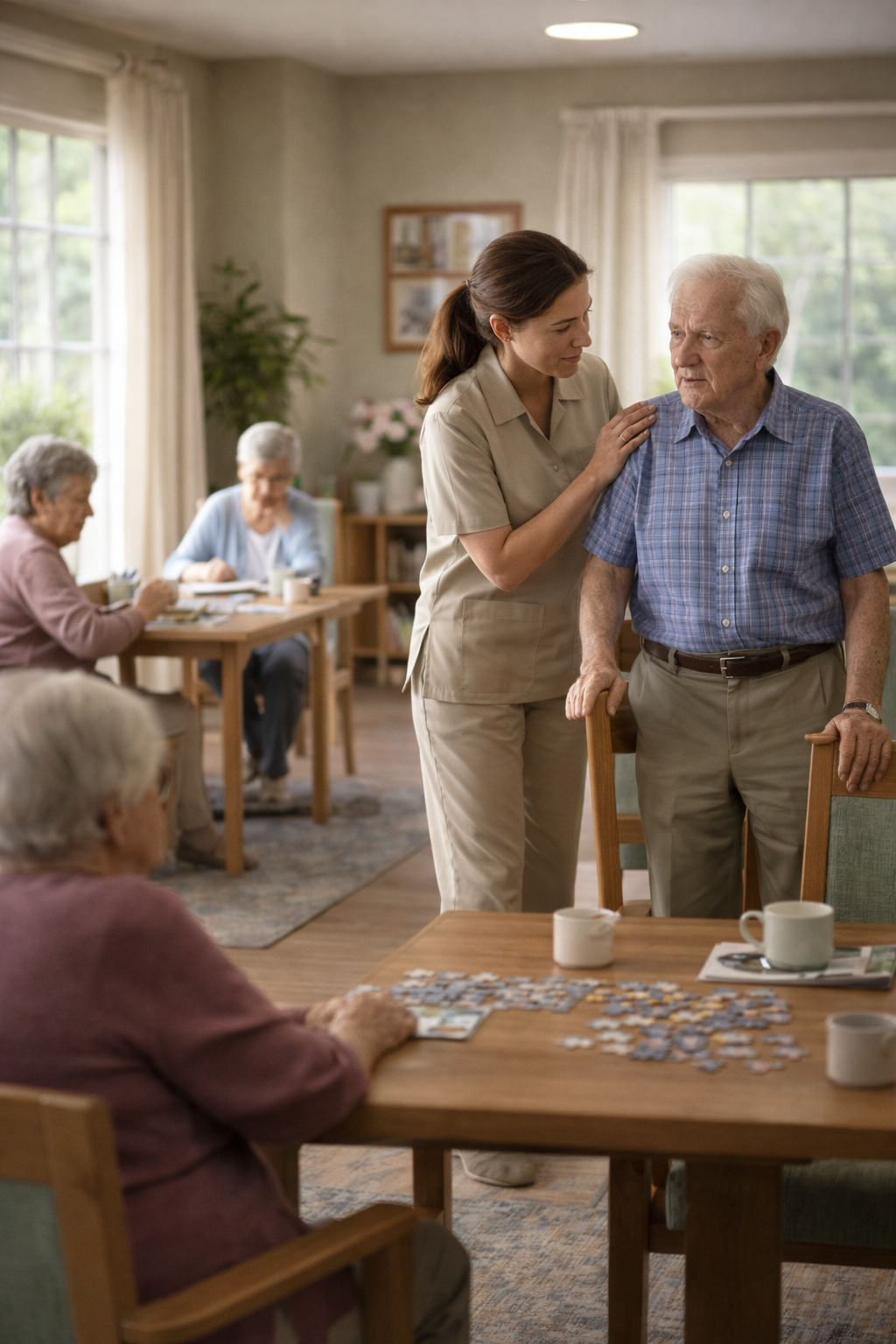
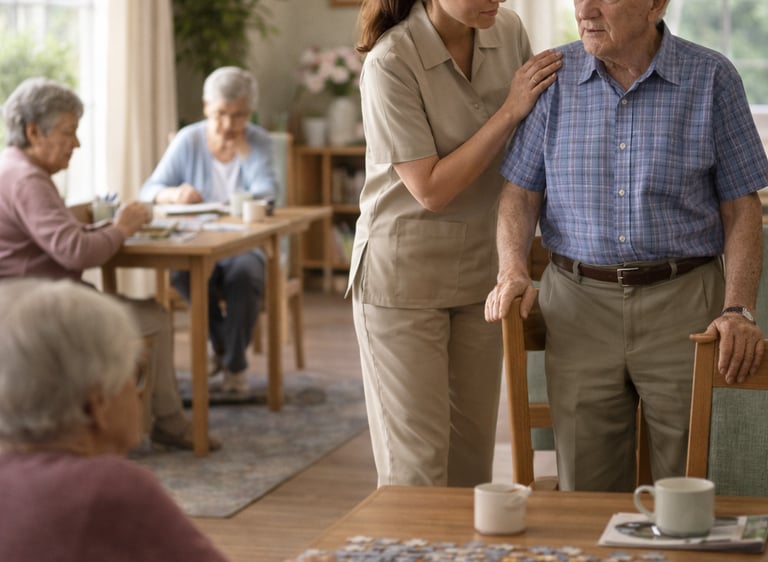
Watch Staff Interactions
Do staff kneel to eye level?
Do they redirect gently?
Are call lights answered promptly?
Behavioral & Medical Management
Behavior is communication in dementia. Medication should not be the first solution.
What it includes:
Care planning around triggers, sleep patterns, pain management, nutrition changes, and structured engagement.
How to evaluate:
Ask how they handle agitation. Review antipsychotic use rates. Look for individualized care plans, not generic behavior notes.
Review Care Planning
Care should evolve as cognition changes.
Ask:
How often are care plans updated?
Are families notified of behavioral changes?
Who leads interdisciplinary meetings?


Ask About Nutrition & Weight Loss
Dementia often affects appetite and swallowing.
Ask:
How do you monitor weight changes?
What happens if intake declines?
Do you offer adaptive utensils or finger foods?


Dementia is progressive. Care needs increase over time.
Not all facilities are equipped for advanced behavioral symptoms.
Staffing consistency matters more than décor.
A calm unit is usually the result of strong leadership and adequate staffing — not luck.
The best dementia care feels structured, predictable, and respectful.
Important Realities to Know
Medicare Nursing Home Compare: Review staffing and antipsychotic usage rates
Your State Survey Agency: Inspection reports and complaint findings
Long-Term Care Ombudsman: Advocacy and resident support
Alzheimer’s Association: Education on stages and progression
Additional Resources
Contact
support@thenursinghomeguide.org
© 2025. All rights reserved.
Important Disclaimer: This website provides educational information only and is not intended as medical, legal, or professional advice. Always consult with healthcare professionals, legal advisors, and facility administrators when making decisions about nursing home care. The information presented here should not be used as a substitute for professional guidance tailored to your specific situation.
Clear, independent guidance for choosing skilled nursing and memory care — without referral fees or sales pressure.